
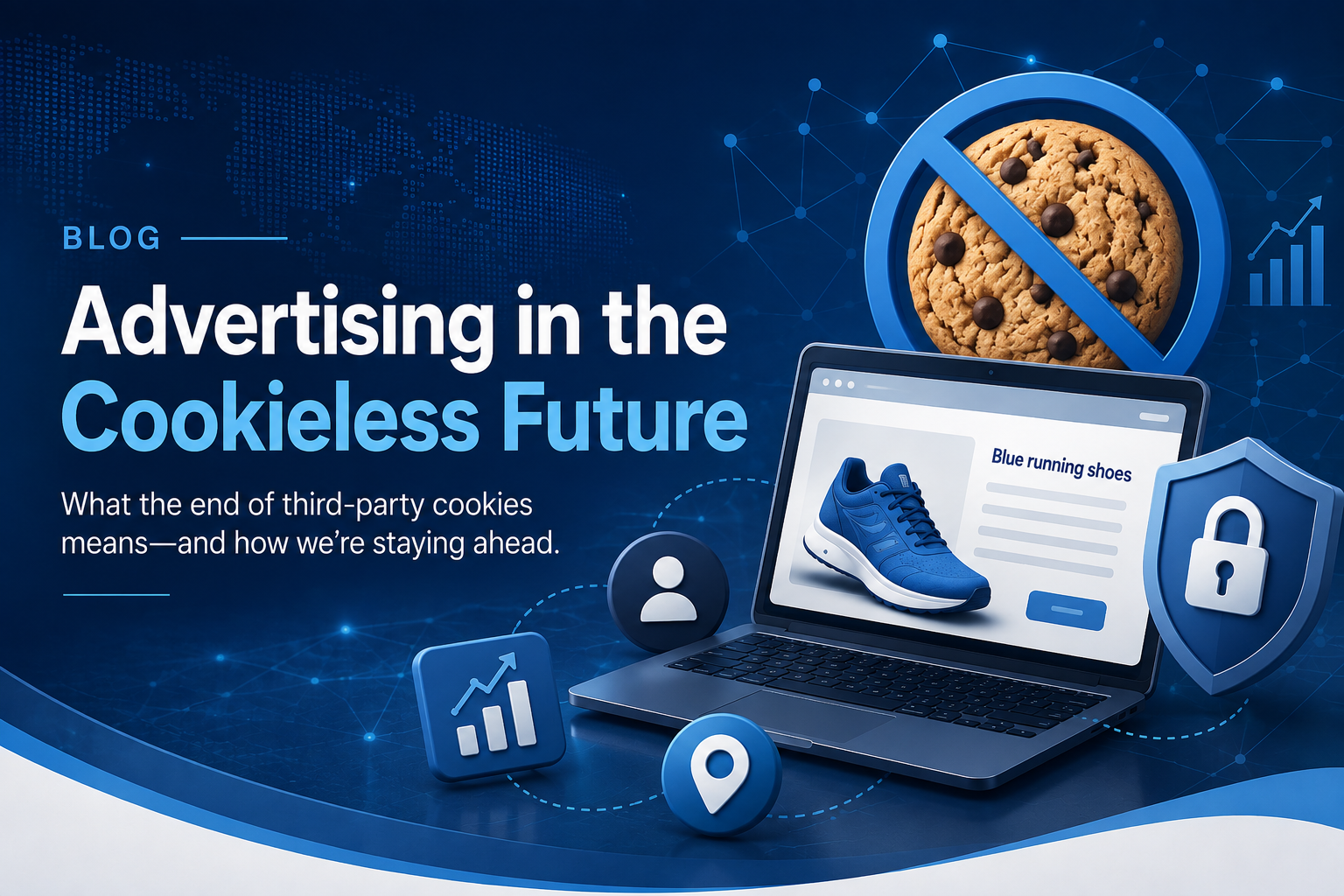
Digital advertising is changing. For years, cookies have played a major role in how advertisers understand online behavior, build audiences, deliver relevant advertising, and measure results. But increased consumer privacy expectations and changes across major browsers have pushed the advertising industry toward a future where marketers can no longer depend as heavily on traditional third-party cookies. For businesses, that naturally raises a question: Will digital advertising still be able to reach the right people without cookies? The answer is yes. But the technology and strategies behind that targeting are evolving. First, What Exactly Is a Cookie? Despite the name, we're not talking about chocolate chips. A cookie is a small piece of data that a website stores on a user's device. Cookies can help websites remember information such as login details, shopping-cart contents, preferences, and previous activity. They have also historically helped advertising platforms understand consumer behavior across the web. Imagine someone is shopping for a new pair of running shoes. Their online activity might indicate an interest in running through searches, websites they've visited, online communities, or previous purchases. Traditionally, cookies could help connect some of those behaviors and allow advertisers to make informed assumptions about that consumer's interests. So, What Does "Cookieless" Advertising Mean? Cookieless advertising doesn't mean digital targeting disappears. It means advertisers increasingly need to use technologies and data strategies that don't depend on traditional cookies to identify and understand audiences. And this transition isn't completely new. Browsers such as Safari and Firefox have already operated with significant cookie restrictions for years, meaning digital advertising technology has been adapting to these changes long before "cookieless advertising" became an industry buzzword. The bigger shift is toward a combination of privacy-conscious identity solutions, first-party data, contextual targeting, device-based strategies, and other methods of reaching consumers. What Replaces Cookies? There isn't one single technology replacing the cookie. Instead, modern advertising is becoming a combination of several targeting approaches. Contextual Targeting Rather than relying exclusively on someone's previous browsing history, advertisers can place ads alongside content that is relevant to the product or service. A sporting-goods company, for example, might reach consumers while they're reading content related to fitness, running, or outdoor recreation. Device-Based Targeting Device IDs provide another method for reaching audiences without relying on traditional browser cookies. These strategies can be particularly useful for campaigns designed around geographic or audience-based targeting. Addressable Streaming TV Streaming television also provides opportunities to reach specific audiences using data-driven targeting while delivering advertising through premium television environments. The source material specifically identifies contextual targeting, device ID targeting, and addressable Streaming TV among the solutions that can operate in a cookieless advertising environment. Identity Is Changing, Too Another important development is the emergence of alternative identity frameworks such as Unified ID 2.0 (UID 2.0). Rather than attempting to identify consumers through traditional third-party cookies, these technologies are designed to provide advertisers with another privacy-conscious way of recognizing audiences across digital environments. The goal is straightforward: maintain useful advertising experiences while giving consumers greater privacy and control over their information. The source describes UID 2.0 as a deterministic rather than probabilistic approach, designed to provide greater confidence in audience targeting while preserving privacy. But What About Measuring Results? This may be one of the biggest concerns for businesses. If traditional cookies become less important, can advertisers still determine whether campaigns are actually working? Yes. Modern campaigns have several ways to measure consumer actions beyond cookie-dependent conversion tracking. Depending on the campaign and business, those can include: Call tracking and call matching Foot-traffic attribution Chat-widget interactions Website form fills Local SEO activity Website analytics That means marketers can continue looking beyond impressions and clicks to understand whether advertising is generating meaningful business activity What Businesses Should Be Doing Now Instead of waiting for another browser or platform announcement, businesses can start preparing today. Focus on building strong first-party customer relationships and collecting data appropriately. Make sure your website and analytics are configured correctly. Diversify your advertising strategy across search, social, streaming, display, contextual, and other channels rather than relying on a single targeting method. Most importantly, work with advertising partners who understand how privacy changes affect both targeting and measurement. Because the future of digital advertising isn't about finding another way to secretly follow people around the internet. It's about using better signals to connect businesses with consumers when the message, audience, and moment make sense. PMG Digital Brief Digital marketing changes quickly. Your strategy should be ready to change with it. PMG Digital helps businesses navigate the evolving digital landscape with audience-focused advertising strategies built around measurable results. Ready to talk about what the cookieless future means for your advertising strategy? Contact PMG Digital to start the conversation. digital@wpsdlocal6.com
For years, businesses have measured digital success by one question: "Where do we rank on Google?" That question still matters—but it's no longer the only one. Artificial intelligence is fundamentally changing how people search for information, discover brands, and make purchasing decisions. Instead of scrolling through pages of search results, consumers are increasingly asking AI platforms like ChatGPT, Google AI Mode, Gemini, Claude, and Perplexity for direct answers. Those answers often influence buying decisions before a customer ever visits a website. The result? Businesses must begin optimizing not only for search engines—but also for AI. AI Search Is Growing Faster Than Most Businesses Realize The latest data from Similarweb's 2026 Generative AI Landscape Report shows just how quickly the market is evolving: AI platforms now generate approximately 9.5 billion monthly web visits, a 70% increase year over year. More than 40% of U.S. Google searches now display AI-generated overviews. Search queries are becoming longer and more conversational. Consumers are relying on AI for research, comparisons, and recommendations before visiting company websites. For businesses, this means visibility is no longer determined solely by traditional search rankings. AI Doesn't Replace SEO—It Changes It One of the biggest misconceptions is that AI makes SEO obsolete. It doesn't. Instead, AI rewards businesses with: Helpful, original content Demonstrated expertise Accurate business information Strong website structure Consistent publishing Trustworthy brands These have always been good SEO practices—but now they also determine whether AI systems reference your business in their responses The New Goal: Become the Trusted Source Unlike traditional search, AI doesn't always provide ten blue links. Instead , it recommends only a handful of sources. That means businesses should focus less on producing large amounts of content and more on creating the most useful content available on the topics their customers care about. Educational blogs, FAQ pages, videos, customer success stories, and location-specific information all help establish authority that AI systems can recognize. Visibility Matters More Than Clicks One of the most interesting findings from the report is that consumers often remember the brands AI mentions—even if they never click the website. Being recommended inside an AI response is becoming a form of digital advertising in itself. In fact, users are significantly more likely to visit a business after it has been recommended by AI than one they discover through traditional browsing. For businesses, this means brand authority is becoming just as valuable as website traffic. What Businesses Should Do Right Now The businesses that adapt early will have a significant advantage. Start by: Publishing educational content regularly. Keeping your website accurate and up to date. Answering real customer questions. Investing in local SEO. Building authority through videos, articles, and expert resources. Monitoring how AI platforms reference your brand. Waiting until AI becomes "mainstream" may mean falling behind competitors that are already building visibility today. How PMG Digital Can Help The digital landscape has changed before, and it's changing again. At PMG Digital, we're helping businesses prepare for the next evolution of online marketing by combining proven SEO strategies with emerging AI optimization techniques. From content strategy and website optimization to paid media and analytics, our team focuses on ensuring your business is discoverable wherever customers are searching—whether that's Google, ChatGPT, Gemini, or whatever comes next. Because the future of search isn't coming. It's already here. Want to know how visible your business is in AI search? Contact PMG Digital for a complimentary AI & SEO Visibility Review and discover how your business appears across today's leading search and AI platforms. email: digital@wpsdlocal6.com